

Words by Jenny Lynn Davis | Images by Al Blanton
At first glance, the different pieces of Magnolia L&H Group may seem difficult to connect.
There is real estate brokerage and development. Construction and municipal consulting. A technology arm working with products ranging from fire retardants and wastewater treatment to alternative energy and smart-home security.
To founders Tim Brown and Russ Duggar, however, they all point toward the same goal.
“The Magnolia L&H Group aims to build safer, more secure, and more sustainable communities,” Brown says. “That statement encompasses every one of our LLCs.”
Founded in 2023 and headquartered in Jasper, Magnolia L&H Group grew from a real estate venture into an umbrella organization that today includes Magnolia Land & Homes, Magnolia L&H Construction, Magnolia L&H Technologies, and Magnolia L&H Management.
The expansion happened quickly, but the groundwork began before the company itself was founded.
Brown and Duggar initially spent months developing plans and processes for a large project that ultimately fell apart. Rather than considering the work wasted, they used what they had created as the framework for new opportunities.
Their backgrounds bring two different sets of experience to that work.
Duggar spent 33 years in the insurance business and earned his real estate license more than two decades ago, eventually becoming a broker. Brown, who grew up in the area, spent years in ministry and as an Army chaplain before moving into strategy and operations work with Special Operations Command, and later, Google.
Brown describes himself as the more fast-moving of the pair and Duggar as the deliberate one.
“Russ is steady, I am controlled chaos,” Brown laughs.
Duggar put the difference more simply.
“I just do not like doing things twice,” he says.
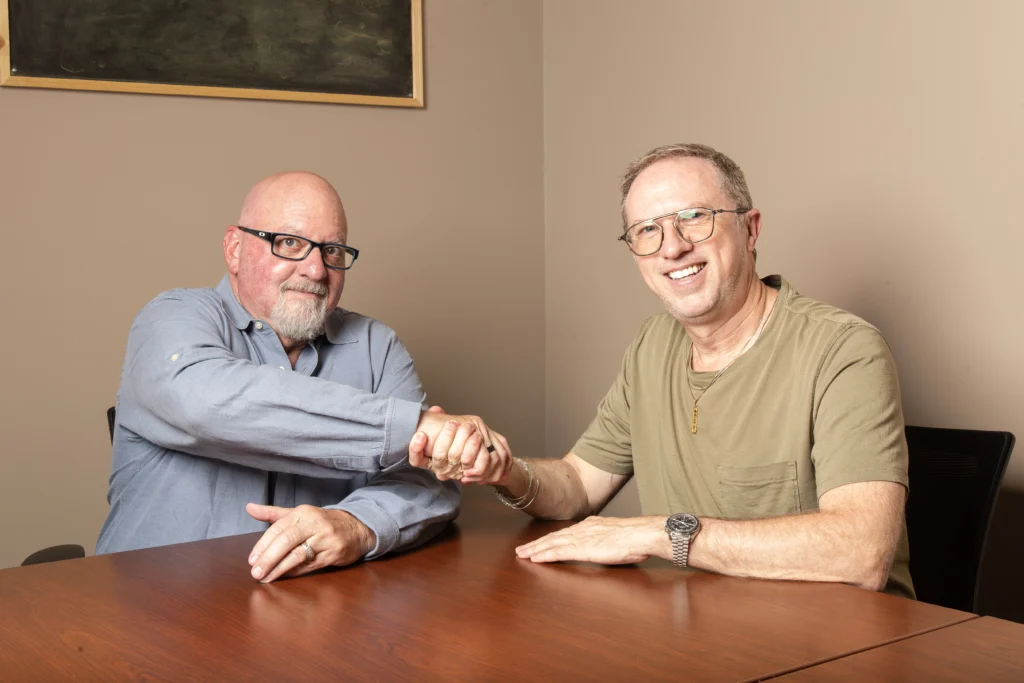
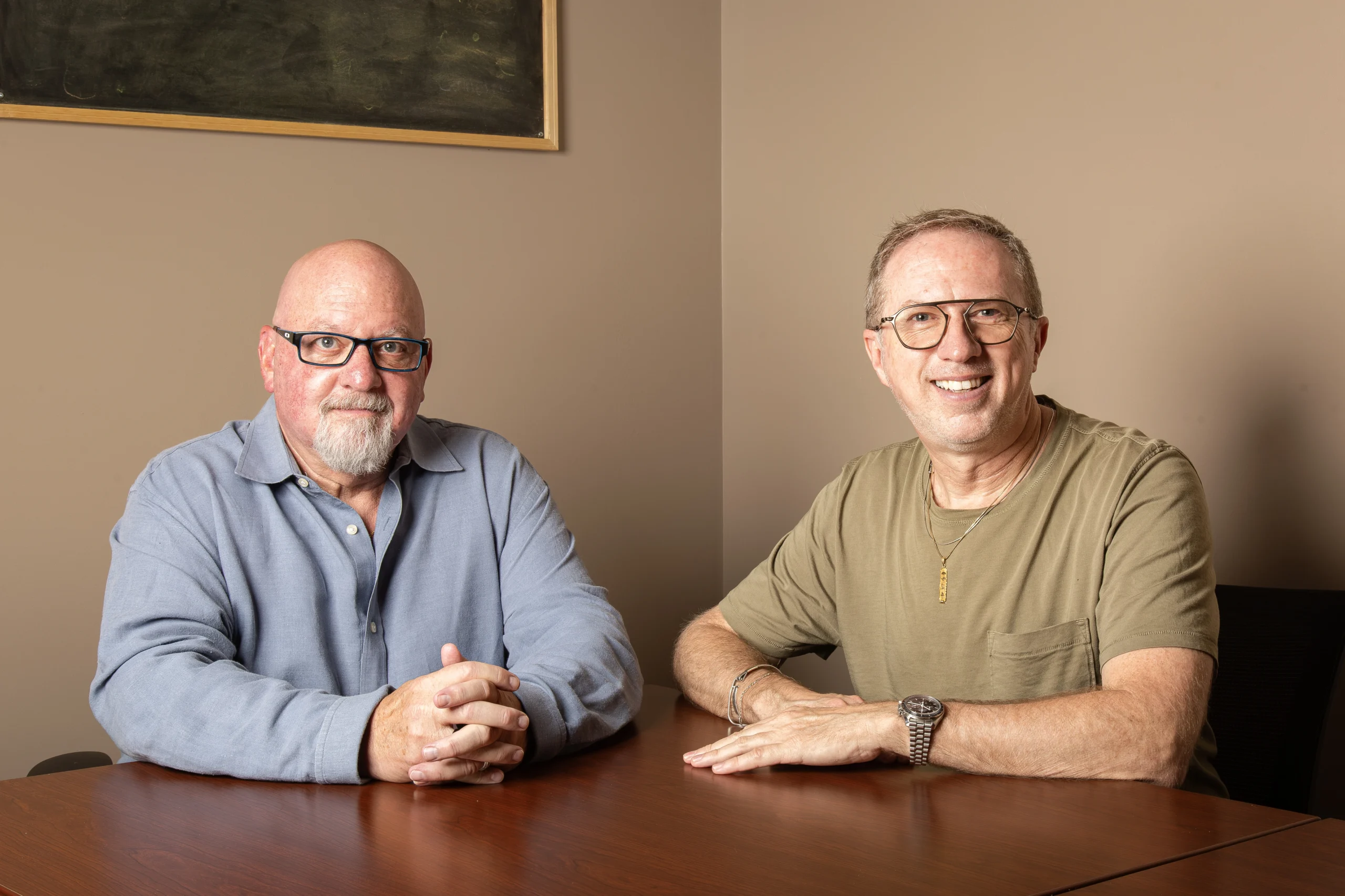
Today, Duggar primarily brings his experience in real estate, finance, and longstanding community relationships to Magnolia L&H Group, while Brown focuses heavily on strategy, operations, and project management. They are joined by a broader team that includes longtime Jasper businessman and former state legislator B.T. Crowe.
The company’s various arms are intended to work together rather than operate as unrelated businesses. Magnolia L&H Group can participate in a project through real estate, development, construction, or consulting while also incorporating technologies it believes can improve the finished product.
Those technologies currently include a water-soluble fire-retardant product; wastewater-treatment enzymes; graphene-based solar and battery technology; security and smart-home systems; and Perfect Block, a building product made with recyclable materials.
Brown and Duggar say the ultimate goal is to incorporate some of those products into their own developments, creating projects that go beyond conventional construction.
One place where that broader vision is beginning to take shape is Cordova.
The city was devastated by two tornadoes on April 27, 2011, and Duggar has a personal connection to what followed. At the time, his insurance agency had significant business in Cordova, and his office became a catastrophic-claims center for approximately six months.
Now, he is involved from a different direction.
“It is meaningful to have been involved first in paying claims after the destruction and, 15 years later, in helping put development back on the ground,” Duggar says.
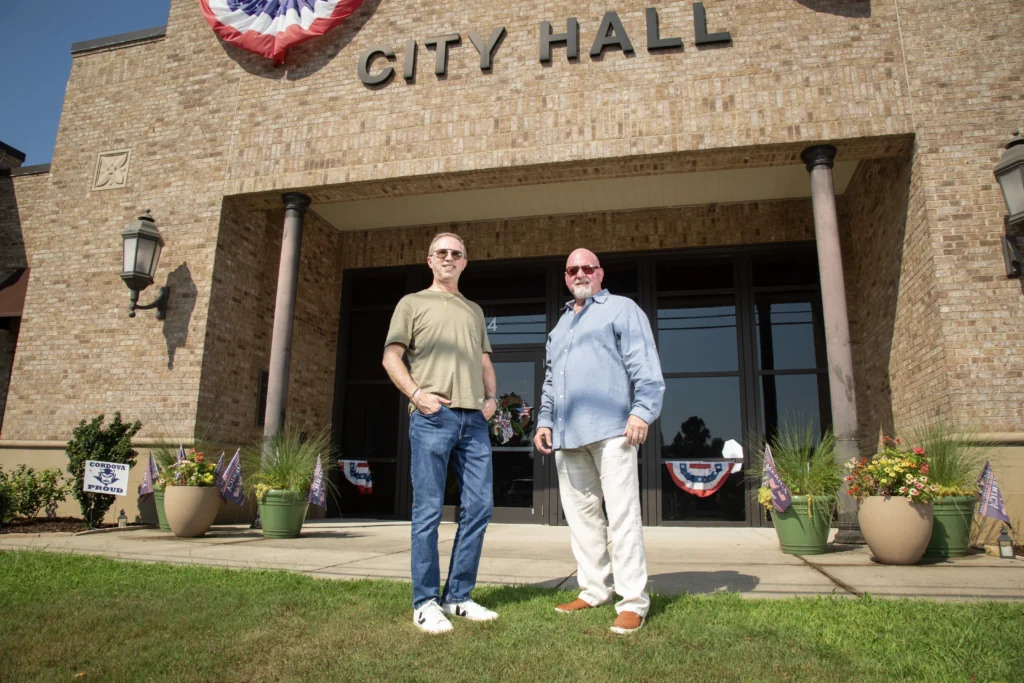
Cordova had already invested in a long-range master plan when Brown and Duggar met with Mayor Jeremy Pate and Cordova Economic and Industrial Development Authority Executive Director Renee Sides. What impressed them, they said, was not simply the plan itself, but the willingness of community leaders to move it forward.
“Cordova was different because its leaders met us with open arms and asked, ‘How can we help you help us?’” Duggar says.
The resulting public-private partnership has become Magnolia L&H Group’s largest and most visible effort to date.
Plans encompass both downtown improvements and new development near Gardner’s Gin Road. Brown says that the larger vision includes residential development, walking and horseback trails, tiny homes, a lodge, and resort components. The company is also working toward infrastructure improvements and a revitalized, more walkable downtown.
Some changes are already visible, as six businesses have opened in Cordova within a 12-month period, with additional businesses expected. But Brown and Duggar say the larger measure of success will not be the number of buildings constructed.
Brown envisions a Cordova with hundreds of new homes, a renewed Main Street, and a downtown where families gather. Increased revenue, he says, can also create opportunities for stronger schools and services.
“The infrastructure matters,” Brown says, “but seeing a community develop is the heartbeat of why we are doing this.”
Both men view the project as a model that could eventually be adapted for other communities facing similar challenges. The details would change from place to place, Duggar says, but the processes being built now could provide a starting point elsewhere.
“We do not need to reinvent the wheel each time,” he says. “We can take the template developed in Cordova, adapt it, and place it over another community that needs similar help.”
It is an ambitious vision for a company only a few years old, particularly one whose work already stretches across multiple industries. Brown and Duggar readily acknowledge that bringing those ideas from plans on paper to completed projects has involved setbacks, team changes, and countless moving parts.
But both return repeatedly to the same idea: the work is meant to produce something larger than the company itself.
For Brown, who spent years working around the world before returning to Walker County, it is also a return to the community-building he watched his father undertake as a pastor.
For Duggar, now a new grandfather after a career spent doing business in this area, the motivation increasingly comes down to legacy.
“Five or 10 years from now, I hope we will remember that the work was never about us,” Duggar says. “It was about communities and people.” WL