

Words and Images by Jenny Lynn Davis
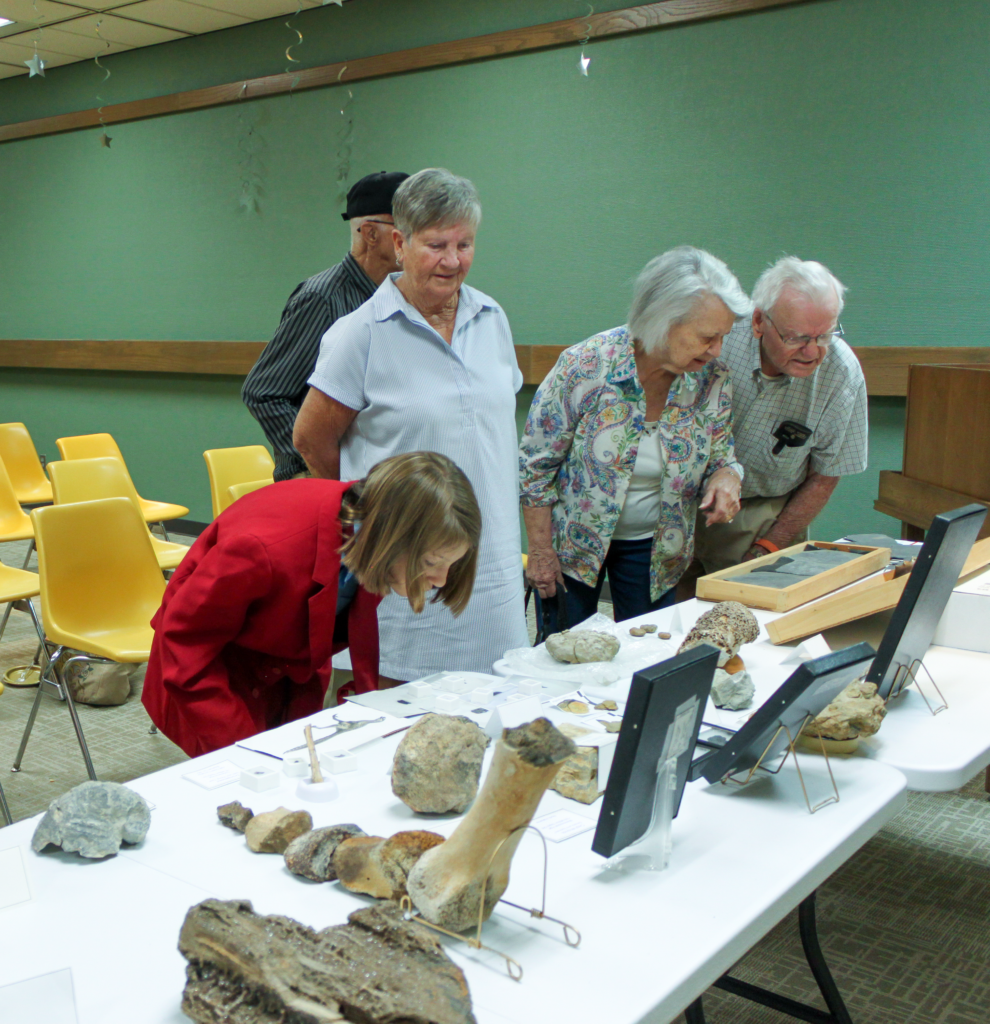
The Carl Elliott Regional Library – Jasper Public Library invited community members to explore a deeper level of Alabama history on Thursday morning during a special presentation held as part of the library’s adult summer reading program.
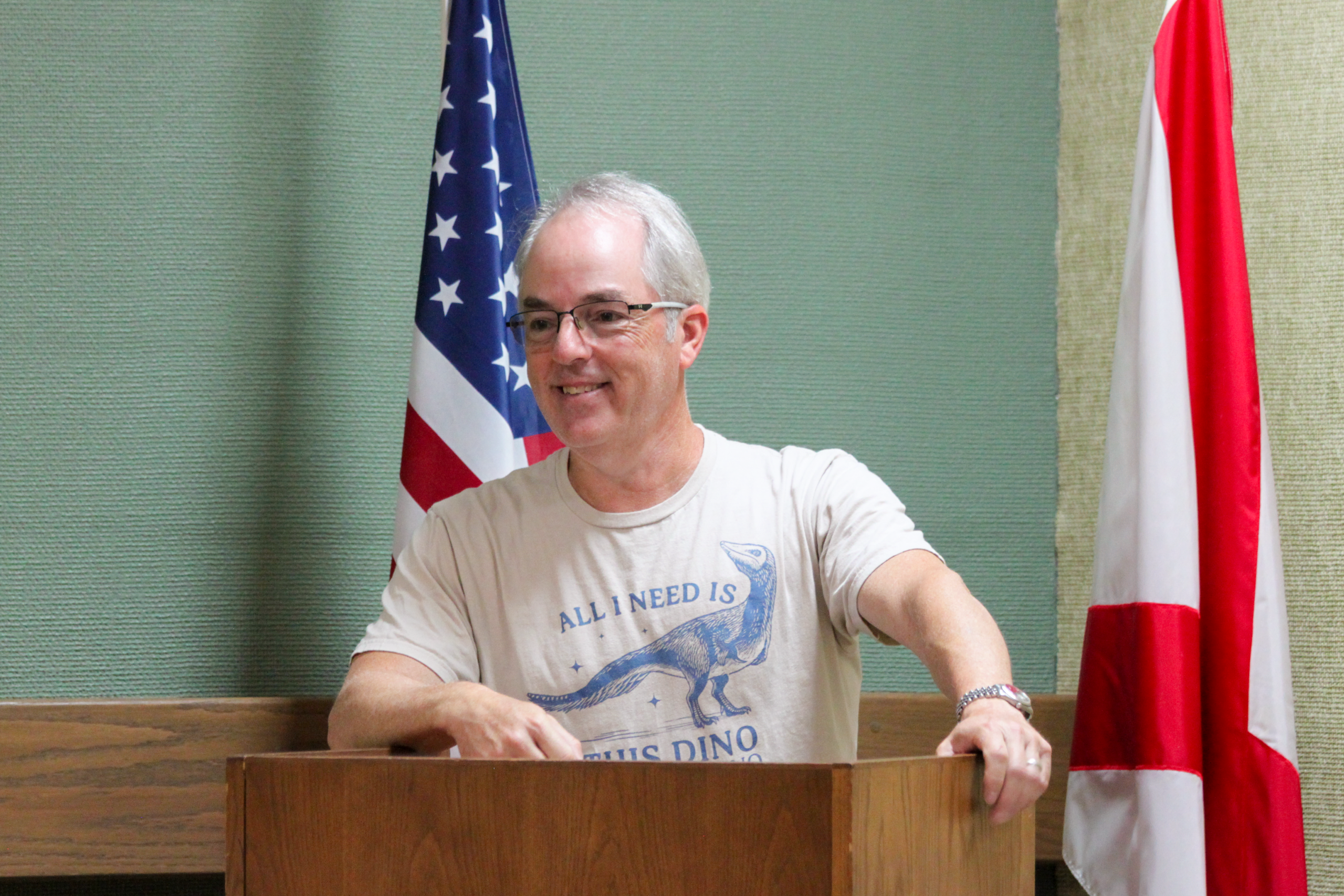
Jim Braswell, president of the Alabama Paleontological Society, introduced the audience to paleontology – the study of prehistoric life – and explained why Alabama possesses one of the most varied fossil records in North America.
“Alabama is an amazing state for fossils, and it is becoming more widely recognized for that,” Braswell said.
Although the presentation covered fossil sites and discoveries throughout the state, much of the program centered on the Union Chapel Mine, an internationally significant fossil site located just east of Jasper.
“It is extraordinarily important not only to Alabama but internationally,” Braswell said. “It is a truly world-class fossil site.”
Union Chapel is especially known for trace fossils, which preserve evidence of an animal’s activity rather than the animal itself. These may include footprints, trails, burrows, and resting impressions.
“Bones and teeth are the remains of a dead animal, but trace fossils offer insight into what an animal was doing at a particular moment,” Braswell said. “I like to think of a trace fossil as an animal captured in motion.”
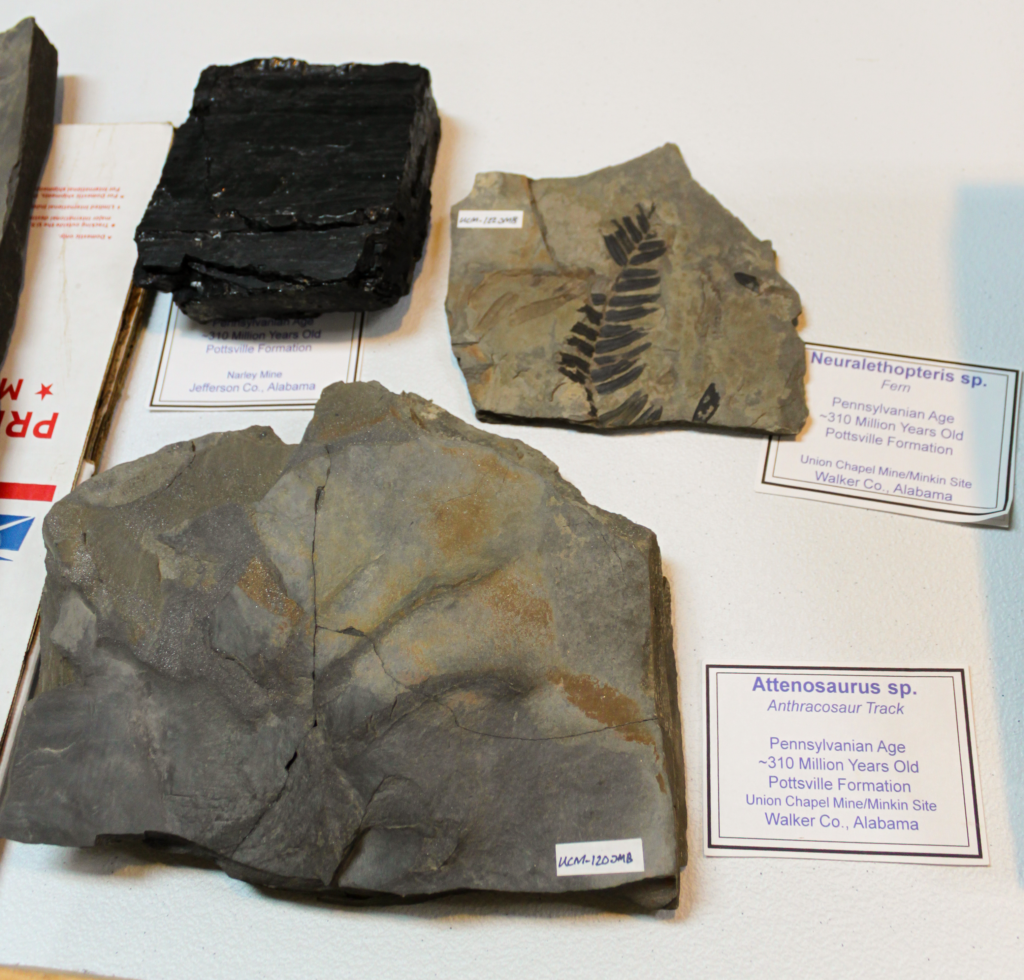
Braswell said the site’s importance was first recognized approximately 25 years ago after an Oneonta High School student told a teacher that his grandmother owned the mine site. During a visit, the teacher split open a piece of shale and discovered a fossil trackway. Within hours, numerous tracks had been found, including those left by horseshoe crabs, invertebrates, and some of the earliest four-legged vertebrates capable of spending significant time on land.
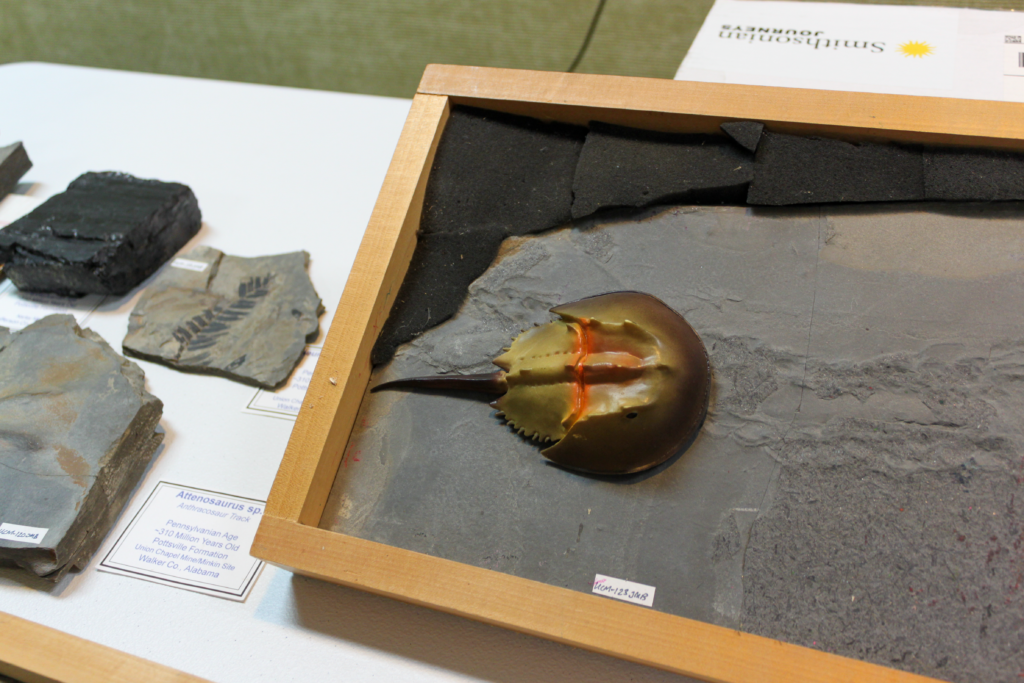
Because the property had operated as a surface coal mine, it ordinarily would have been reclaimed after mining ended. Paleontologists, citizens, and public officials, including Congressman Robert Aderholt, worked to preserve the fossil-bearing material. The Alabama State Lands Division eventually assumed control of the property, while the Alabama Paleontological Society was authorized to organize collecting trips, document discoveries, and help transfer scientifically important specimens to museums.
Tens of thousands of trackways have since been recovered from Union Chapel. Major institutions, including the Smithsonian, the American Museum of Natural History, McWane Science Center, and the Alabama Museum of Natural History, hold specimens from the site.
Braswell said researchers have described Union Chapel as one of the world’s premier trackway sites of its age. One scientist even compared it to a “Rosetta Stone” because it preserves evidence from so many parts of a single ancient ecosystem.
“A remarkably complete environment is captured in the rock,” Braswell said.
The fossils date back to the early days of the Earth when scientists and researchers believe the area that is now Alabama was nearer to the equator and looked dramatically different than it does today. Periodic floods and tidal surges covered footprints left in the mud, protecting them long enough to become fossilized. Union Chapel appears to have occupied an environmental boundary between the forest and the tidal flat, helping explain why it preserves such an abundance of animal tracks.
The discoveries include traces left by amphibians, early reptile-like animals, insects, crustaceans, and large predators. Braswell highlighted the footprint of Attenosaurus subulensis, a salamander-like predator that may have grown six to nine feet long.
More recent finds demonstrate that Union Chapel continues to produce new scientific information. A rare body fossil of a land-dwelling scorpion may represent a previously unknown species. Another enormous slab preserves the trackway of what was likely a giant eurypterid, commonly called a sea scorpion.
“Imagine a nine-foot, scorpion-like animal emerging from the water,” Braswell said.
The eurypterid slab is now housed at McWane Science Center and is being studied as a possible new trace-fossil species. Braswell said it is one of at least two potential new species discoveries made at Union Chapel in recent years.
Access to the mine must be arranged through the Alabama Paleontological Society because the state-owned property is surrounded by private land. Braswell emphasized that members of the public should not attempt to enter the site independently.
Organized trips have also been temporarily suspended because vegetation has overtaken portions of the property and the equipment previously used to turn the spoil piles is no longer adequate. Although money has been raised for the work, the Paleontological Society is still seeking suitable heavy equipment and an experienced operator.
Only a fraction of the site’s fossil-bearing material has been explored. Some spoil piles may be approximately 100 feet thick, while collectors have generally worked only the upper several feet.
“We see no clear end to what the site could produce,” Braswell said.
The Society’s long-term goal is to develop Union Chapel Mine into a public fossil park and tourism destination, ideally accompanied by a museum in Jasper or near the mine where visitors could see fossils recovered from the site.
Braswell also discussed Alabama’s mosasaurs, sharks, prehistoric whales, dinosaur remains, and an exceptionally rare dinosaur egg. He concluded by sharing that local residents Brenda Ladun and Brack Bradley are completing an Alabama Public Television documentary devoted to Union Chapel Mine and its paleontological significance. WL