

Words by Jenny Lynn Davis | Images by Nick Rizzo
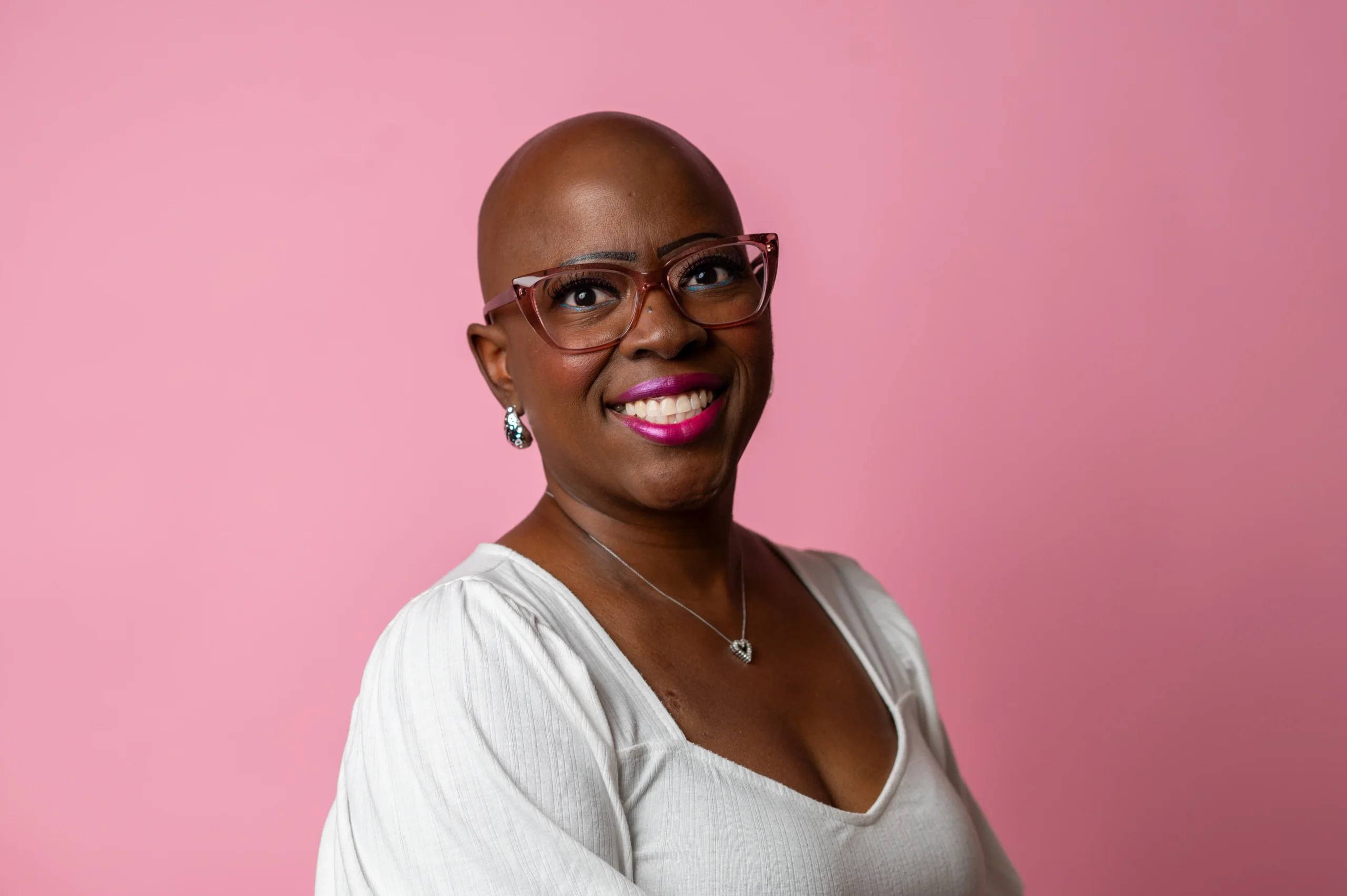
When people who love Shon Meadows Geeter are asked to describe her, a few words rise quickly to the surface: resilient, strong, brave.
Those words are fitting, but they are not the whole of her.
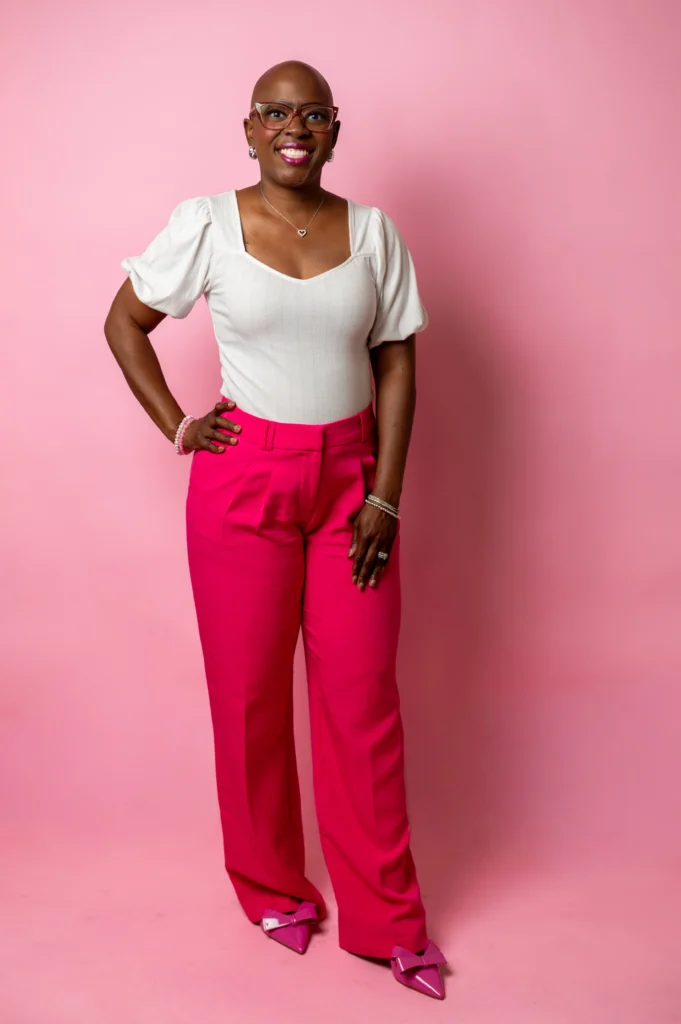
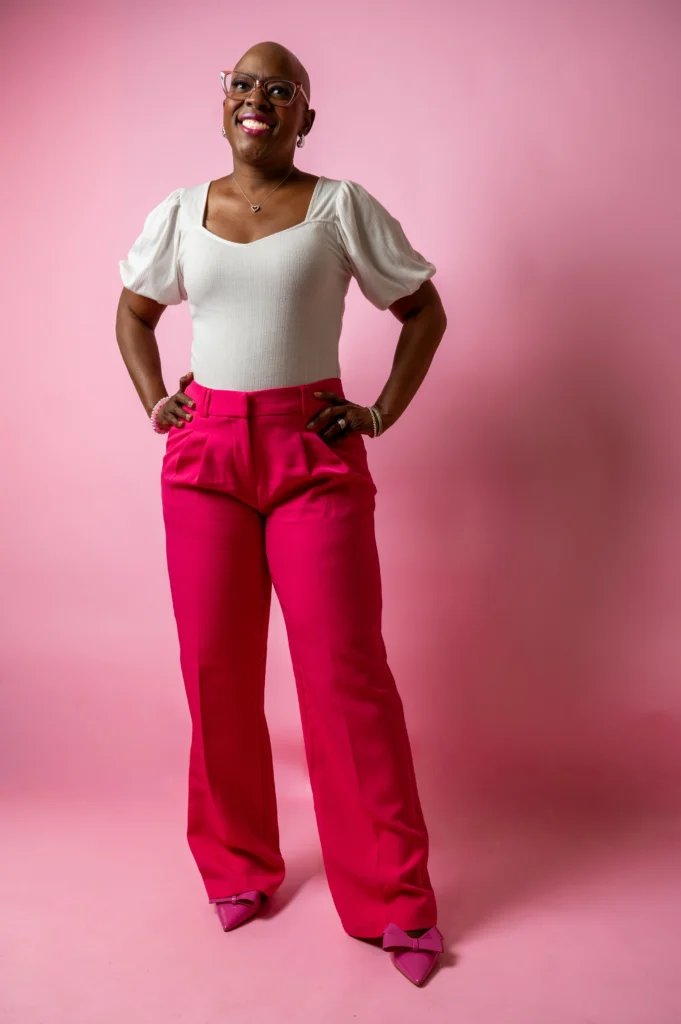
Shon is a wife, mother, nurse, friend, daughter, believer, traveler, and shopper who is strong-willed, driven, and fiercely loyal to the people she loves. She is a woman who likes to laugh, loves posing for pictures, enjoys making TikToks, and can find a reason to smile and dance in any situation.
She is also a woman living with Stage 4 metastatic triple-negative breast cancer.
But Shon is clear about one thing: cancer is part of her story, but it is not her entire identity.
“I don’t want to be defined by a diagnosis,” she says. “I want to still be defined as me.”
Before the scans and treatments, she was a little girl growing up in Sipsey, Alabama, surrounded by cousins, neighbors, and a sense of community that made everyone feel like family.
“I had a beautiful childhood,” Shon says. “I grew up playing with cousins who stayed two or three houses down. It was truly community. It didn’t matter where you were, somebody was going to look out for you.”
That early sense of community and care would eventually shape her career. Shon knew from a young age that she wanted to become a nurse. When she was about 10 years old, her grandmother was diagnosed with cancer. Seeing her grandmother in the hospital during the last stages of the disease left a lasting impression.
“That really pushed me to want to help other people. I always knew I was going to be a nurse,” Shon says.
A 1996 graduate of Walker High School, Shon began her college path at Bevill State Community College (then Walker College). She graduated as a Licensed Practical Nurse in 1999, worked for a year, then returned to school and graduated as a Registered Nurse in 2003.
Her nursing career took her through many different roles and settings. She began at Princeton Hospital, where she worked on a cardiac floor. Over the years, she also worked in intensive care, hospice, home health, and travel nursing, spending a total of 16 years at Princeton, eight years in hospice, and the final two years of her career at the VA Hospital in Birmingham.
“I just enjoyed helping families and being somebody they could count on during their time of need,” she says. “With nursing, it was never about me. If I had personal situations going on, it was still always about taking care of that patient and taking care of that family.”
That perspective would become even more personal when Shon found herself on the other side of healthcare, not as the nurse beside the bed, but as the patient in need of care.
Shon had always kept up with her mammograms. With a significant family history of breast cancer, she understood the importance of paying attention to her health. Five cousins, all under the age of 50, including Shon and her sister, have been diagnosed with breast cancer. One cousin has the BRCA1 gene, and Shon said geneticists believe the family pattern may be connected to her father’s side. Although Shon does not have the gene, she was diagnosed with triple-negative breast cancer, one of the most aggressive forms of the disease.
In December 2023, a biopsy came back normal. A few months later, after noticing bleeding and drainage from her breast, Shon sought medical attention again. Early testing suggested a hematoma, but as time went on, she could still feel a knot and knew something wasn’t right. By the fall, additional testing showed something suspicious. Shon was referred to a surgeon, and on December 10, the same day her daughter graduated from nursing school, Shon learned she had triple-negative breast cancer.
At first, she thought she would have surgery and be fine. She knew breast cancer. She had seen it in her family, and she understood treatment from a medical standpoint. But more testing brought far more difficult news.
On December 26, Shon was waiting in the car while her husband, Reggie, was inside a store. She opened her online medical chart and read that she had Stage 4 metastatic breast cancer that had spread to her lungs, liver, spleen, lymph nodes, bones, and other areas.
As a former hospice nurse, she immediately understood the weight of those words.
“The first thing I thought was, ‘I’m about to die. I’m literally about to die,’” she says.
She was inconsolable in the car when Reggie came out of the store. All she could say was, “I’m going to die.”
He began calling the people closest to her, including her mother, aunt, and pastor. Before long, Shon’s house was full of people praying over her. In that same moment of fear and heartbreak, Shon says she witnessed God move in ways that were bigger than her diagnosis. Reggie, who had always believed in God but had not regularly attended church, got saved that day.
That was the moment something shifted in Shon.
“I went from crying and being inconsolable to giving God praise,” she says. “I said, ‘You know what, God? This is bigger than me. You are using me in this diagnosis for your glory, and whatever that path looks like, I want to follow it however you want me to lead.’”
When she met with her doctor, Shon was told her prognosis could be six months to a year or less. She was given the option to go home and pass peacefully or to try chemotherapy. Her husband and daughter cried, but Shon told them, “Y’all quit crying. God’s got this.”
Shon soon began chemotherapy and immunotherapy. After her first set of scans following that treatment, some of the cancer was completely gone and other areas had shrunk. The pain had eased, and she did not get sick from the chemo.
“Again, it was God,” she says.
She continued to receive chemotherapy three times a month for more than a year and has now completed 48 rounds of chemotherapy and four rounds of radiation, including radiation for small spots found on her brain. After noticing changes in existing lumps, she transitioned to a clinical trial at UAB and began a new treatment which doctors hope will also treat the brain metastases. The first cycle of the new therapy was difficult, but Shon says she has learned how to manage the side effects with medication and did better with the second and third cycles. She also says the change in treatment required its own kind of strength.
“That’s a lot to take in when you hear, ‘This treatment is not working,’” she says. “In the back of anybody’s mind, you wonder, ‘Where am I going to go with this new treatment? How is this treatment going to affect my everyday life? How will I feel after chemo?’”
Still, Shon chose to keep moving forward.
“I had to be strong enough to say, ‘I’m going to get through this treatment just like I did the other one. If I hit a rough spot, I’ll find a way to manage it,’” she says.
Through every round, her husband has been beside her.
“This man has not missed one treatment session,” she says. “Every week, he carries coolers, bags, food, whatever I need. He has been there.”
On treatment days, Reggie packs Shon’s suitcase with a warm blanket, a fan, snacks, drinks and anything else she may need. They go to Birmingham, have her labs drawn, wait for results, eat lunch, and then return for treatment. A chemo day can last about six hours, and inside the treatment suite, they laugh, talk, watch TV, and make jokes. He tells her it has become his relaxation time because he gets to rest while she is in the chair, often taking pictures or making TikToks.
TikTok has become a community through which Shon has connected with others facing cancer, learned about medications and side effects, and found a space where she can encourage others while still being herself.
“My goal is to encourage one person who gets the same diagnosis, who hears ‘stage four metastatic,’ and let them know this is not the end,” she says. “There is still so much life to live as long as you want to live it.”
Some of her videos show treatment updates; others show her dancing, joking, and laughing with Reggie in the background. To Shon, those moments help show that cancer has not taken her humor or her joy.
“Rather than be sad or feel a certain way about this diagnosis, I choose to live in the joy of each day,” she says. “TikTok has given me a place to still be me, be funny, and encourage the next woman or man going through this diagnosis.”
That choice to live fully has shown up in other ways too. Since her diagnosis, Shon has made it a point to do something fun each month, whether that means traveling, going to concerts, or simply making memories with people she loves.
Her joy is real, but Shon does not pretend the road is easy. She knows the seriousness of her diagnosis, and she has never been afraid to talk about death, perhaps in part because of her years as a hospice nurse, but also because of the depth of her faith.
“Death doesn’t scare me,” she says. “My thing is, I’m right with God.”
Still, she is honest about wanting more time.
“Am I ready for it to all be over? No,” she says. “I still have a whole bunch of things I want to do.”
One of the gifts she has already received was seeing her daughter, Brianna, begin her own nursing career.
“It was one of my proudest moments. It was full circle for sure, with her starting her career as a nurse and me having to leave nursing,” she says.
When Brianna graduated, Shon prayed for enough time to see her through her first year of nursing. She has gotten to see that and more.
Family and friends have surrounded her in practical and emotional ways. Her nursing friends, especially, understood the seriousness of what she was facing and offered to be there for her and in whatever ways they were needed. That kind of love, Shon believes, is not accidental, but is the fruit of the way she has tried to live.
As a nurse, Shon spent years loving patients and families through some of the most vulnerable moments of their lives. Now, in her own vulnerable season, love has returned to her through family, friends, church, medical providers, and even strangers online.
Being a patient has also deepened her understanding of advocacy. Shon believes patients should listen to their bodies, do their research, and push for answers when something feels wrong.
“You need to be on top of things when it comes to your own healthcare,” she says. “You don’t have to just take what a doctor says and run with it. I tell people all the time: do your research and advocate for yourself, because nobody is going to work for you like you.”
She also hopes more physicians will listen closely when patients say something is wrong.
Shon’s story is not simple. It holds grief, fear, medical complexity, hard conversations, and the daily realities of living with an aggressive cancer. It also holds laughter, marriage, faith, friendship, dancing, travel, prayer, nursing, motherhood, and joy.
She is not denying the seriousness of her diagnosis; rather, she is living in defiance of the idea that seriousness must erase joy. She is still Shon. And if there is one thing she wants others facing cancer, chronic illness, or any painful season to know, it is this: God has the last say.
That truth is the reason she can sit in a chemo chair and laugh and the reason she can speak of Heaven without fear while still wanting every bit of life available to her.
“As long as I know I did right by people in this world and I gave what I could give through loving other people,” she says, “that’s all that matters to me.” WL